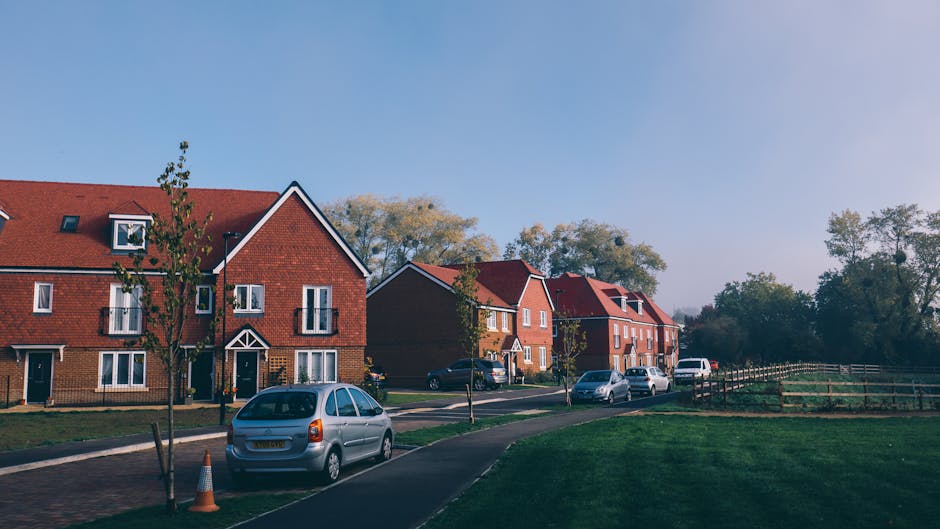
Moving to Goddington Park estate: access & parking tips
Posted on 28/04/2026
If you are planning a move into Goddington Park estate, the last thing you want is a van circling the block while everyone stares at the clock. Access and parking sound like small details, but on moving day they can make the difference between a calm, tidy unload and a messy afternoon with blocked pathways, awkward lifts, and a few choice words. Truth be told, most moving stress starts at the kerb, not in the living room.
This guide brings together practical, local-minded advice on Moving to Goddington Park estate: access & parking tips so you can plan the approach properly, avoid common snags, and make the arrival as smooth as possible. You will find step-by-step guidance, compliance pointers, a realistic checklist, and a few expert habits that help keep the whole day moving. If you are also sorting boxes, furniture, or a tight stairwell, you may find it useful to browse our packing efficiency tips and our advice on simplifying house moving before the big day.

Why Moving to Goddington Park estate: access & parking tips Matters
Access planning is not just about finding a place to leave the van. It affects timing, safety, neighbour relations, and how much lifting your team has to do. A good parking position can shave minutes off each trip in and out of the property. A poor one can add repeated carries, extra stair work, and the sort of slowdown that makes a simple move feel endless.
On estates, the practical challenge is usually a mix of narrow roads, turning space, bay restrictions, gate access, visitor parking rules, and the fact that moving vans are bigger than people remember until they are standing beside one. It is easy to think, "We will sort it on the day." That approach is risky. A bit of planning now is cheaper than a long, frustrating unload later.
There is also the social side. Nobody wants to be the new resident blocking driveways, sitting too close to corners, or leaving a delivery vehicle awkwardly half on the pavement. Good access planning helps you arrive politely. That matters more than people admit, especially in a shared residential setting where first impressions do count.
Expert summary: The best moving-day parking plan is the one that reduces walking distance, keeps pathways clear, and avoids last-minute improvisation. If the van can park legally and safely close to the entrance, everything else becomes easier.
How Moving to Goddington Park estate: access & parking tips Works
The process is straightforward in principle, though the details matter. You identify the access route, check the parking options, confirm any restrictions, and match the van size to the space available. Then you build the unloading plan around the best available stopping point, rather than assuming you will find the perfect space on arrival.
In practice, that means thinking through four questions:
- How will the van enter and leave safely?
- Where can it stop without causing an obstruction?
- How far is the carry from the van to the front door or lift?
- What happens if the closest spot is already taken?
That last one is the one that catches people out. If you arrive at 9:00 a.m. expecting an empty bay and find a school run, a trades van, and a resident unloading groceries, your plan needs a backup. A sensible mover will consider alternative positions, a temporary wait point, or a staggered unload. If you are using a man and van service in Goddington, it is worth speaking about the parking layout in advance so the driver can advise on space, access, and any need for smaller vehicles.
Where stairs, lifts, or tight entrance routes are involved, access becomes part of the moving strategy, not an afterthought. The more direct the route from van to property, the smoother the day. If you are moving bulky items like wardrobes or a sofa, this can be the difference between a neat carry and a slightly dramatic pivot in a shared hallway. Nobody wants the latter.
Key Benefits and Practical Advantages
Good access and parking planning gives you practical benefits that show up immediately on moving day.
- Faster unloading: Less distance means fewer trips and less time spent carrying boxes.
- Lower damage risk: Shorter, simpler routes reduce the chance of scuffed walls, dropped items, or strained lifting.
- Less stress: You are not making decisions while juggling keys, box piles, and an impatient driver.
- Better neighbour relations: A tidy, respectful parking plan avoids friction in a shared estate.
- Improved safety: Clear paths reduce trip hazards and make loading easier for everyone involved.
There is a hidden benefit too: planning creates calm. A move is full of moving parts, literally and otherwise. When parking is sorted, you can focus on the things that actually need your attention, like furniture placement, fragile items, and whether the kettle has made it into the right box. If you are still at the packing stage, our packing and boxes service in Goddington can also help take some pressure off.
For many people, that sense of control is worth as much as the saved minutes. To be fair, moving day rarely feels glamorous. But it can feel organised, and that is a win.
Who This Is For and When It Makes Sense
This advice is useful for almost anyone moving into Goddington Park estate, but it is especially relevant if any of the following apply:
- You are moving into a flat or maisonette where loading access is limited.
- You have large furniture or awkward items that need a close parking point.
- You are moving with children, pets, or older relatives who need a simpler arrival.
- You are using a hire van, removal van, or a local removal van in Goddington.
- You expect a weekday move when bays and roads may be busier.
- You need a quick turnaround between keys, lift bookings, and delivery windows.
It also makes sense if you are moving on your own and trying to do too much in one go. There is no shame in reducing the load. If anything, that is the sensible move. Smaller loads, fewer trips, and a parking plan that supports the day can make a huge difference. If your situation is a little more involved, the wider removal services in Goddington page is a good place to compare support levels.
This topic matters even more for flat moves, where shared entrances and communal parking can become pinch points. In those cases, a well-timed arrival matters as much as the unloading itself.
Step-by-Step Guidance
Here is a practical way to plan access and parking without overcomplicating things.
1. Check the route before moving day
Look at the estate approach, road width, turning spaces, and any obvious obstacles such as bollards, speed humps, low trees, or tight corners. If possible, do a quick drive-through at roughly the same time of day as your move. Morning and late afternoon can feel very different. The road that seemed open on a quiet Sunday can be far busier on a weekday.
2. Identify the best stopping point
Choose the closest legal and safe place to stop, not just the nearest spot in theory. A van parked a little further away but fully legal and steady is better than a risky, awkward position that blocks movement. Think in terms of carry distance, not just convenience.
3. Confirm restrictions in advance
Check whether there are resident-only bays, permit-controlled areas, loading limits, or estate-specific rules. If you are unsure, ask the property manager, letting agent, landlord, or managing agent rather than guessing. A five-minute call can save an embarrassing scramble later.
4. Book the right vehicle size
Vehicle choice matters. A small van may be easier to park but could mean more trips. A large van may carry more, but it may be harder to position. The right balance depends on what you are moving and how tight the access is. If you are not sure, a local man with a van in Goddington can help you judge the trade-off.
5. Prepare the unloading zone
Before the van arrives, clear the entryway, open internal doors, and decide where boxes and furniture should go. This sounds obvious, but it saves time. A tidy route from van to room is worth its weight in box tape.
6. Plan for exceptions
What if another car is in your spot? What if the lift is not available? What if the weather turns wet halfway through? A good move has a backup route. Keep these answers in mind before the day starts, not while you are already carrying a heavy chair in the rain.
7. Walk the route once the van is parked
Take a quick look from the van to the property entrance. Spot loose paving, steps, wet patches, or anything that could trip someone carrying a load. This is a small step, but it is one of the easiest ways to prevent silly accidents.
Expert Tips for Better Results
These are the small things that make the whole process feel easier. Not revolutionary. Just effective.
- Move the easiest items first. It warms up the route and gets the rhythm going.
- Keep a parking contact handy. If you have a building manager or neighbour helping with access, save the number before the day.
- Label boxes by room. That way, the unloading team can place things quickly instead of building a mountain in the hallway. For a deeper approach, see how to pack efficiently when moving house.
- Use protective gear early. Door protectors, blankets, and straps are worth using from the start, not after the first scuff.
- Keep one small bag with essentials. Keys, phone charger, documents, medication, and basic refreshments. The usual suspects.
- Build in a buffer. Even 15 minutes helps if parking, weather, or lift access runs late.
If you are moving heavier furniture, it is wise to use correct lifting technique. A decent plan means less strain on your back and fewer awkward twists. If you want a refresher, our guide to kinetic lifting explains the principle in plain English. It is not about looking athletic. It is about moving safely and smartly.
Small aside: do not become overconfident after lifting one box of books. That is how the day gets a bit silly. Keep the pace steady.
Common Mistakes to Avoid
Most moving-day access problems are predictable. That is the good news. The less good news is that they are also common.
- Assuming there will be space. Parking on estates can be tighter than it looks.
- Arriving without checking restrictions. If a bay is permit-only or time-limited, you need to know before the van turns up.
- Booking a van that is too large for the site. Bigger is not always better when access is awkward.
- Blocking pathways. Even briefly, this creates risk and frustration.
- Leaving unloading decisions until the last minute. That is how boxes pile up in the wrong room.
- Ignoring weather. Rain changes everything. Wet floors and slippery boxes are not a good combination.
One other mistake is underestimating the time needed for shared access. Flats and estates often need a little more patience. If you are moving from or into a flat, our flat removals service in Goddington is designed with that sort of access in mind.
And yes, sometimes people think they will just "sort it when they get there." That phrase has caused many a headache.
Tools, Resources and Recommendations
You do not need a van full of specialist kit for a successful move, but a few practical tools make access and parking easier to manage.
- Measuring tape: Useful for checking door widths, lift space, and awkward furniture angles.
- Phone maps and satellite view: Helps you spot the likely parking area before arrival.
- Furniture blankets and straps: Reduce damage risk during short carries from van to entrance.
- Box trolleys or sack trucks: Helpful where paths are level and clear.
- Notebook or moving checklist: Old-fashioned, maybe, but very effective when you are under pressure.
- Contact list: Keep the landlord, managing agent, and mover's number together in one place.
If your move also includes items that need special handling, it is worth reading about creative solutions for moving beds and mattresses and why professional piano moving saves time and stress. Those are the sorts of items that can turn a neat plan into a tricky one very quickly.
For storage between move-out and move-in, storage in Goddington can be useful if access timing is tight or if you need to split the move over more than one day. That can actually ease parking pressure too, because fewer items need to be unloaded in one go.
Law, Compliance, Standards, or Best Practice
For parking and access on a residential estate, the main thing is to stay within the property rules and common UK road safety expectations. Exact arrangements can vary by site, lease, managing agent, or local authority area, so it is sensible to verify before moving day rather than relying on assumptions.
Some best-practice points are simple:
- Do not obstruct pavements, driveways, dropped kerbs, or emergency access.
- Observe any visitor parking rules, permits, or time limits.
- Keep walkways clear for residents, contractors, and pedestrians.
- Use safe loading practices so that items do not fall, slide, or create hazards.
- If you are using professional movers, make sure they are covered appropriately and work to a clear safety approach.
That last point matters more than people sometimes think. Reputable movers should be able to explain how they approach handling, loading, and safety. If you want to understand the broader safety approach, have a look at our insurance and safety information and the health and safety policy. Those pages help set expectations in a straightforward way.
For environmental considerations, particularly where packaging and waste are involved, you may also find our recycling and sustainability guidance useful. It is not directly about parking, of course, but it does shape how tidy and responsible the move feels overall.
Options, Methods, or Comparison Table
Different access strategies suit different types of move. Here is a simple comparison to help you choose the right approach.
| Approach | Best for | Strengths | Limitations |
|---|---|---|---|
| Park closest to the entrance | Small loads, limited furniture | Fastest unload, less carrying, simpler coordination | May not be available; often depends on timing |
| Park in a legal nearby bay | Busy estates, shared parking areas | Usually easier to manage, lower conflict risk | Longer carry, more trips, extra time |
| Use a smaller vehicle | Narrow access, flats, tricky corners | More manoeuvrable, easier to position | May require more journeys or careful loading |
| Split the move into two stages | Large homes, mixed access, storage needs | Reduces pressure on one day, improves control | Needs more coordination and planning |
There is no universal best option. The right choice depends on the estate layout, the amount of furniture, and how much flexibility you have. If you are comparing support levels, house removals in Goddington can be a better fit for larger moves, while removals in Goddington is a useful starting point if you are still weighing up the overall service.
Case Study or Real-World Example
Here is a realistic example. A couple moving into a first-floor flat on a quiet estate assumed they could stop directly outside the building. On arrival, the nearest space was already taken, and a second bay had a time restriction they had overlooked. Instead of forcing the issue, they parked slightly further down the road in a legal space, then used a trolley for the lighter boxes and carried the larger furniture in two controlled trips.
It was not perfect. It was not the dreamy, straight-to-the-door unload people imagine when they first picture moving day. But because they had already sorted the boxes by room, kept the essentials separate, and left the path clear inside the flat, the whole process was manageable. The move took longer than planned, yes, but it stayed calm. No damage, no neighbour complaints, no last-minute panic.
The main lesson? Good access planning does not need to be flawless. It just needs to be realistic. A move becomes much easier when you accept that parking is part of the operation, not a detail to improvise. That mindset alone can save you a fair bit of stress.
Practical Checklist
Use this checklist in the final 48 hours before moving day.
- Confirm the move date, arrival time, and contact numbers.
- Check parking restrictions, permits, and any estate-specific rules.
- Review the route for tight turns, low obstacles, or access barriers.
- Decide where the van should stop and what the backup option is.
- Measure large furniture against entrances, halls, or lifts if needed.
- Prepare floor protection, blankets, straps, and moving trolleys.
- Label boxes clearly by room and priority.
- Pack a small essentials bag for the first day in the new home.
- Keep pathways clear at the property entrance and inside the home.
- Check weather conditions and plan for rain or poor visibility.
If you have a sofa, bed, freezer, or other item needing special treatment, it is worth reading a few targeted guides ahead of time, such as safeguarding a sofa in storage, strategic freezer storage guidance, and house cleaning before you move. Those little pieces add up.
Get a free quote today and see how much you can save.
Conclusion
Moving to Goddington Park estate becomes much easier when you treat access and parking as part of the move plan, not a side note. A sensible parking choice, a clear unload route, and a bit of advance checking can reduce strain, save time, and help the whole day feel far more controlled.
For some people, that means using a smaller vehicle. For others, it means booking more support and planning the unload in stages. There is no single perfect formula. But there is a reliable one: know the space, respect the rules, and keep the route simple.
If you do that, the rest tends to fall into place. Not always perfectly. But well enough, and often better than expected. And on moving day, that is a proper relief.